 Click for Code
Leading the frontend for publishing team in a social media SaaS
Published on April 1, 2026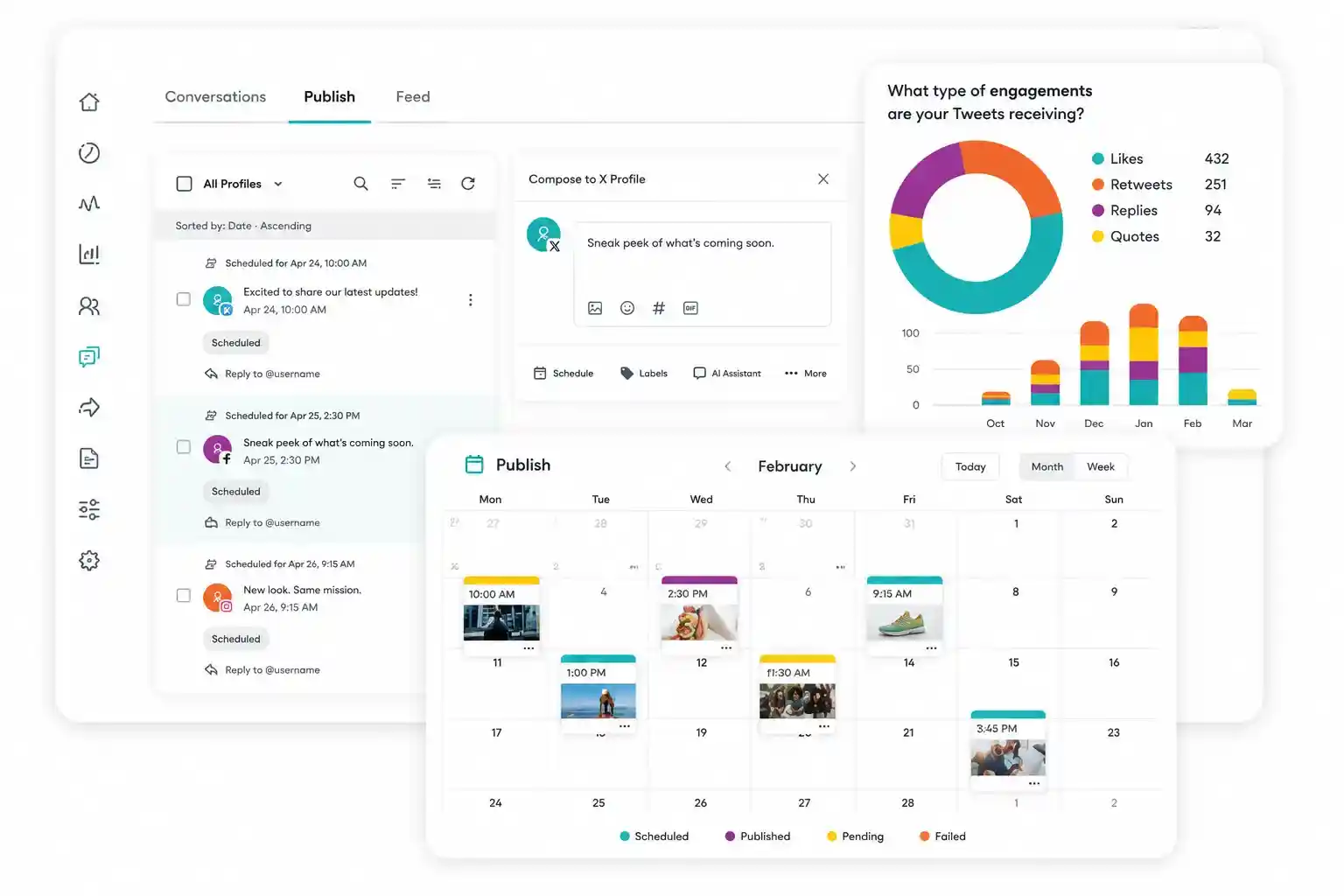
Project Overview
I was the lead frontend engineer on a publishing product. Social teams used it to draft posts, schedule them across accounts and regions, publish to multiple platforms, and manage replies, comments, and likes without switching tools.
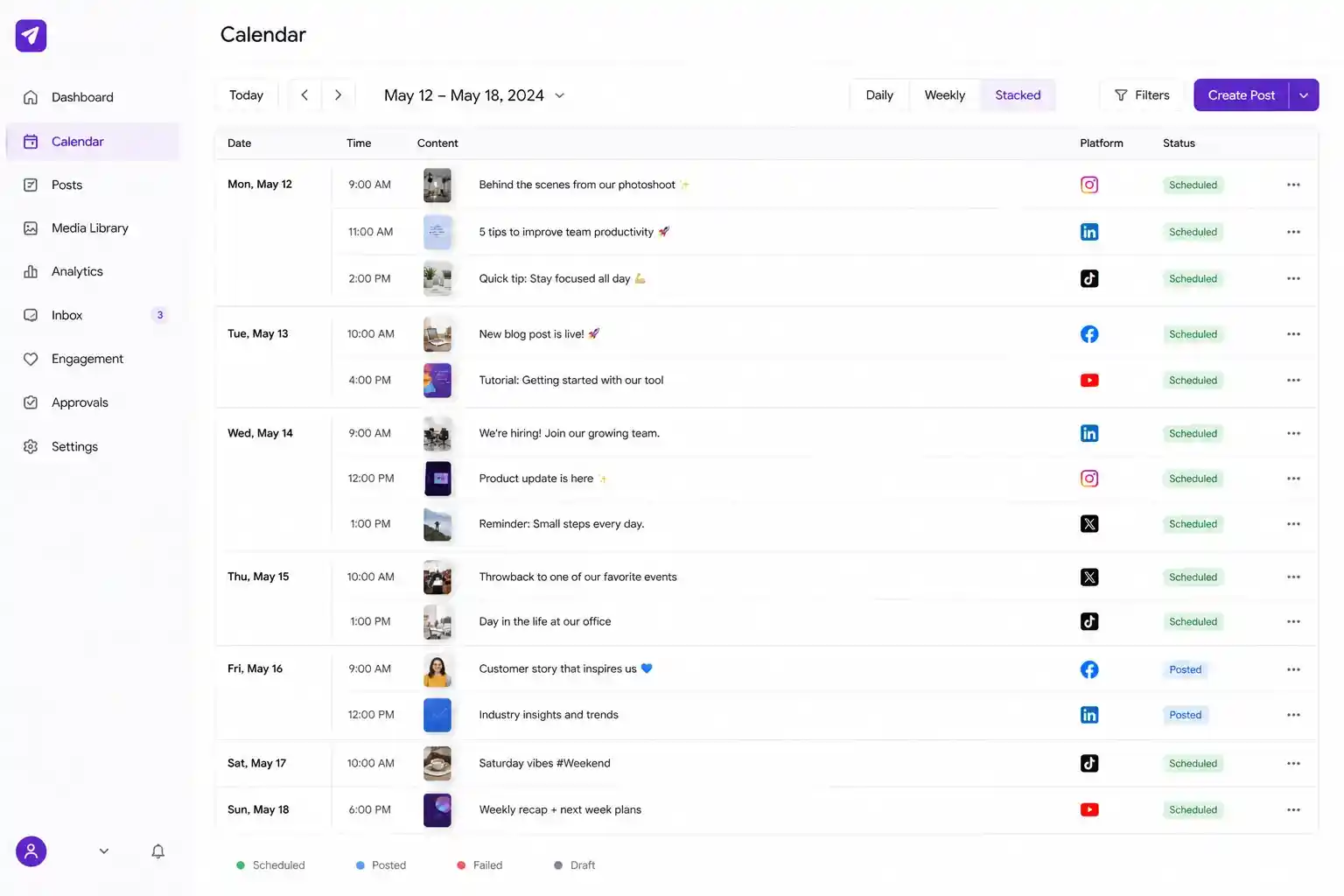
Week, month, and stacked views gave them one place to plan what was going out and when. Some accounts carried hundreds of posts at once, so the UI had to stay fast under real load, not just look complete in a demo.
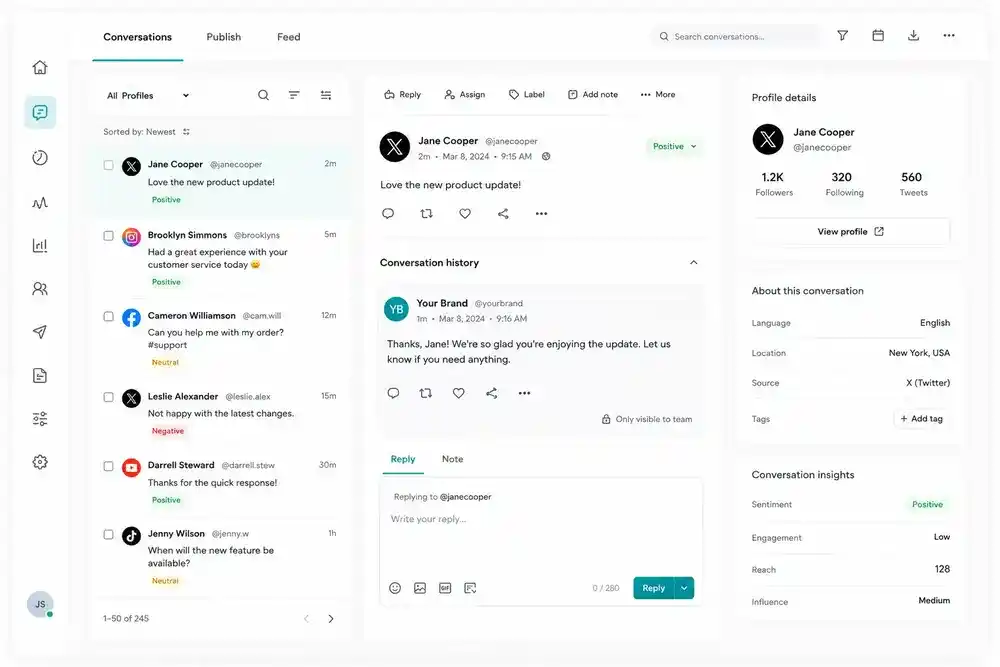
I owned the frontend for that surface end to end: calendar rendering, the flows wrapped around it, platform validations, and performance as the roadmap kept growing.
Process
The stack was Vue with Stencil-based Web Components. FullCalendar v3 powered day and stacked views. Week view was the exception. Product wanted a vertical layout the library did not ship, which later pushed us toward a custom renderer.
Posts moved from draft to scheduled to published inside the calendar. Users filtered by account, region, or content type, then edited copies, swapped media, or changed timing without leaving the view they were already in.
Each platform had its own rules. I added upfront checks for character limits, media dimensions, aspect ratios, and URLs so errors showed before publish, with feedback specific enough to fix on the spot.
Users could also crop images or trim video in the same flow. I shipped an AI assistant to help write posts and tag people. It was optional throughout. The UI surfaced what the model suggested and required an explicit accept or reject before anything went live.
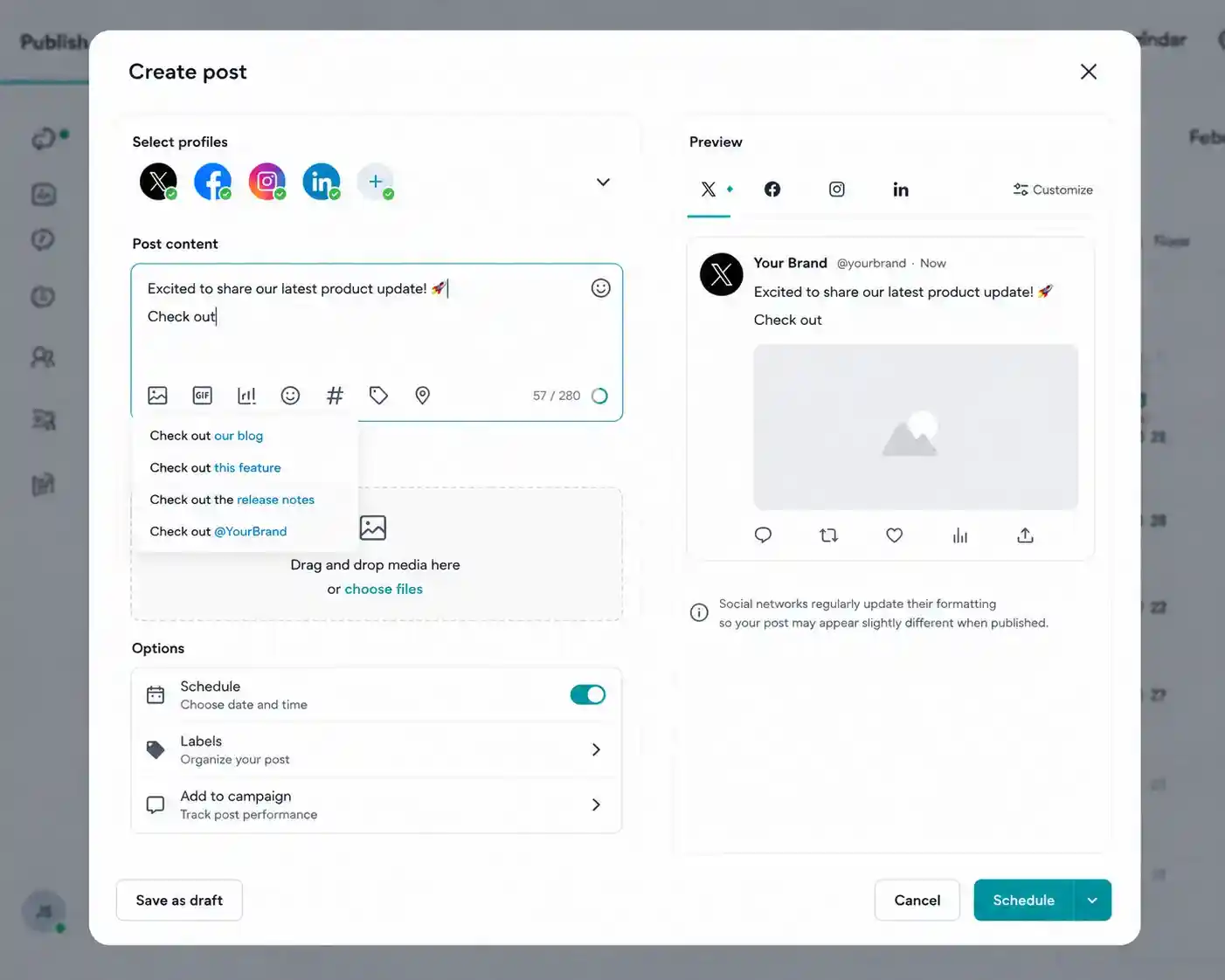
Compose, preview, and schedule across platforms from one modal.
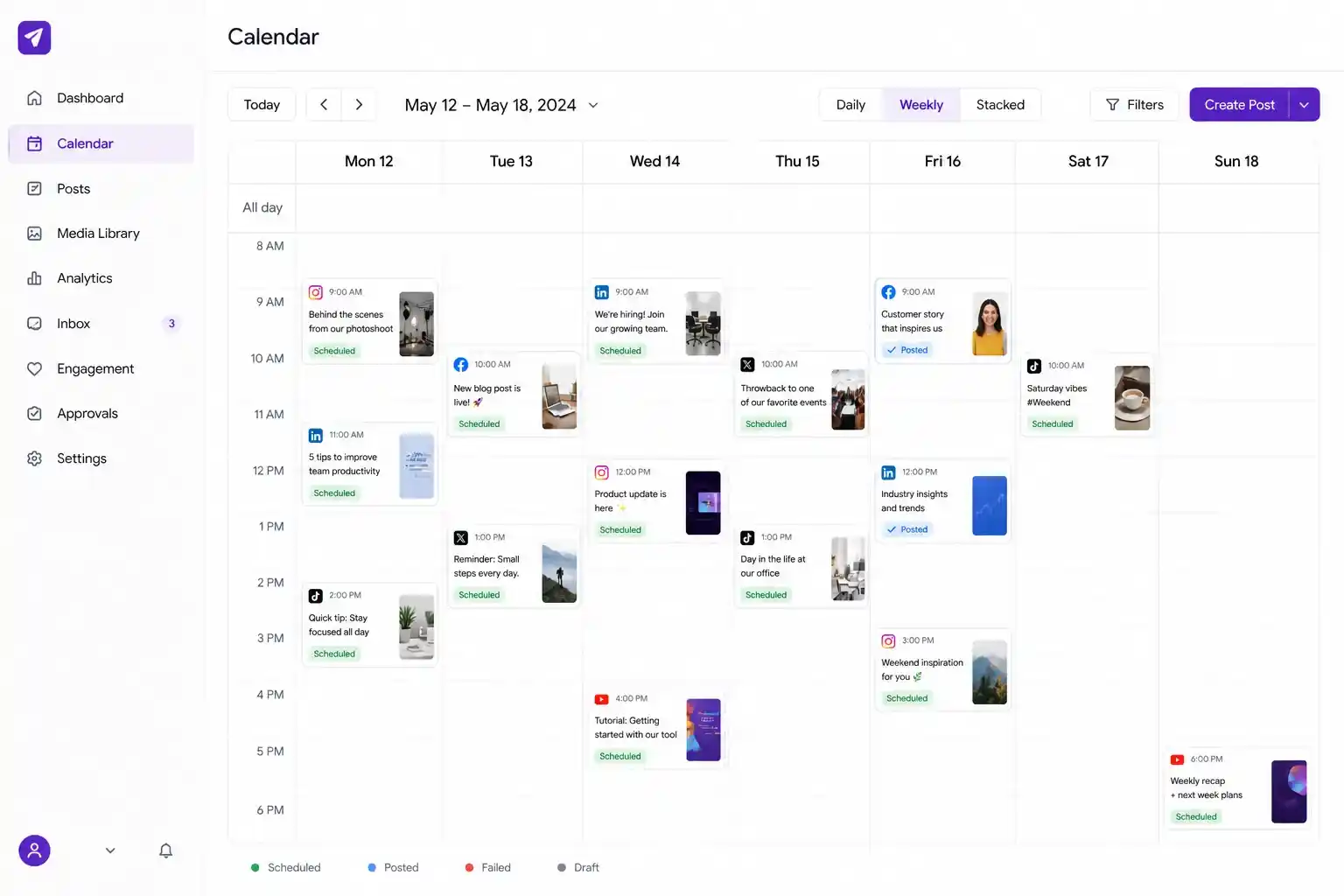
The calendar had to stay fast even with dense week and month schedules.
When the vertical week view landed, I compared a full library migration, roughly $200K and three months of work, against extending FullCalendar. I led the custom renderer path so drag-and-drop, event handling, and view switching still worked. The full breakdown is in the week-view renderer case study.
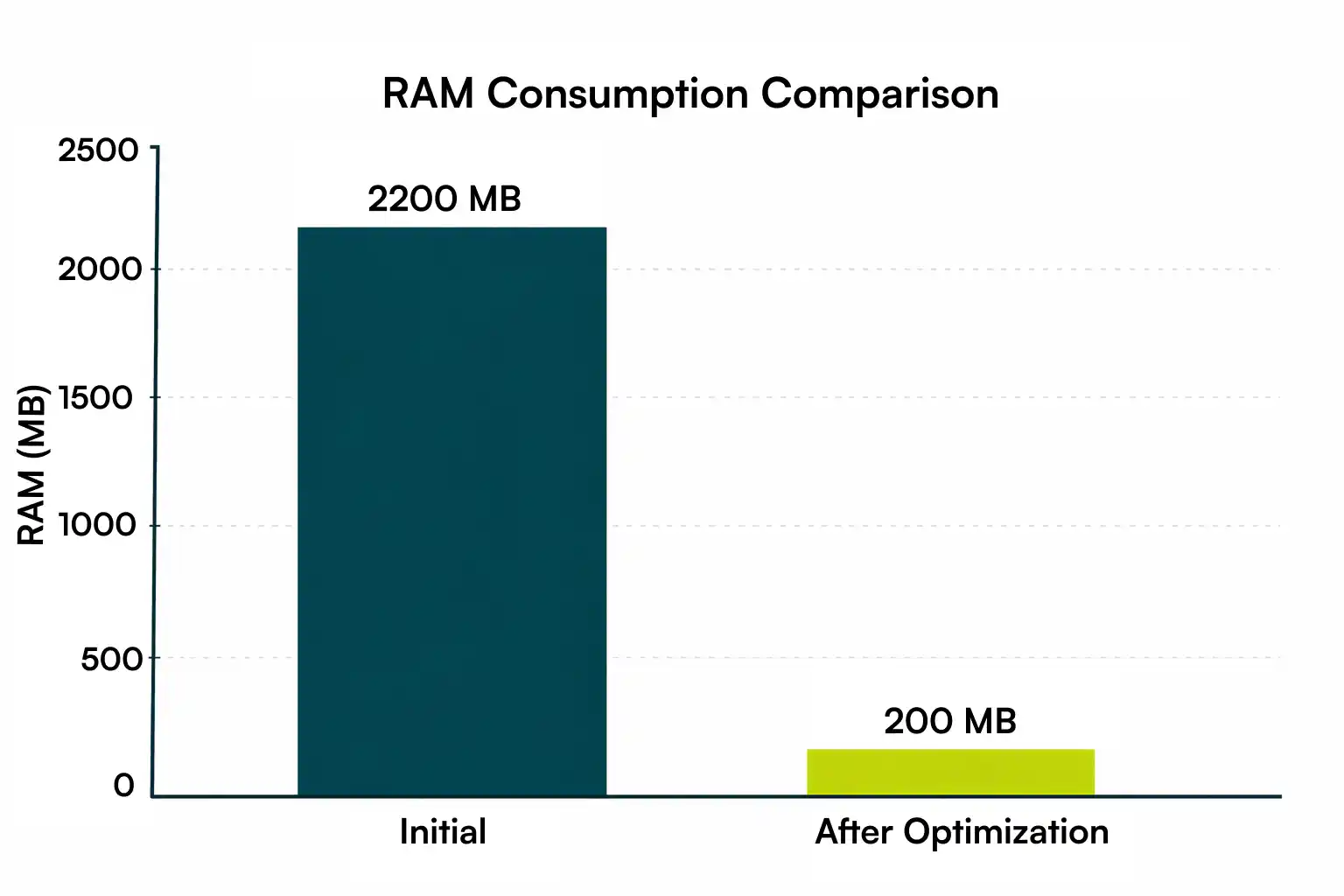
A separate performance crisis hit enterprise accounts with large schedules and tag lists of 1000+ items. A single tab climbed to 2.2GB RAM and put about $60K MRR at churn risk. I traced detached DOM nodes, main-thread long tasks, and an unvirtualized tags list, then shipped lazy-loaded modals, cleanup for detached elements, and list virtualization. Memory settled around 200MB. That work is covered in the memory optimization case study.
Outcome
The product held up as we added validations, in-flow media editing, and the AI assistant on top of an already busy calendar. Teams could plan across all three views, catch platform issues early, and work large schedules without the tab giving out.
The renderer work avoided a costly rewrite. The memory fixes kept high-value clients on a product they could not use before. Both were frontend problems inside the same surface I led, and both shipped without pausing the rest of the roadmap.
Tech Used
Vue with Stencil-based Web Components on a micro-frontend surface. FullCalendar v3 for day and stacked views, plus a custom week renderer where the library could not meet the layout requirement.
Got a clear picture so far?
If you're wondering whether we are a good fit for your project, a quick 15-minute call can help clarify the next steps. Book a Quick Call NowWrite To Us At Your Own Convenience
What People Say
Shaped by years of experience, our stack includes React, Next.js, TypeScript, Node.js, Python, robust databases, and top-tier cloud services - chosen for stability, scalability, and clean engineering practices.

“It’s been such a pleasure working with Parmeet. We’ve been impressed by the quality of his code, his communicativeness, his work ethic, and his passion for making the product intuitive and delightful. We’d recommend him enthusiastically to others and hope to work together again in the future.”

“I worked with Parmeet for half a year, and I can highly recommend him as an experienced front-end developer and a responsible team member. He can quickly understand an issue or a new codebase and provide a solution.”

“I got the chance to briefly work with Parmeet and I must say that I enjoyed every single second of that. He is one of the few people (I’ve worked with) who have a zeal to learn more, can quickly adapt to new technology, is a fast learner, highly productive and more important is honest and humble.
He has got a very pleasing personality and is very presentable.
Parmeet is self disciplined, can manage and plan his time very efficiently and can deliver tasks on time.
I would like to recommend him as a Full Stack Developer (JavaScript) who can deliver polished front end applications on ReactJs that are backed by equally capable backend developed in NodeJs (deployed on AWS Cloud)
People like him are an asset to any team.”

“He is a hard working individual with good insight into what makes UX work for the end user. A joy to work with.”

“We brought Parmeet onto our team to accelerate development of a new product, and he definitely delivered. Parmeet immediately took ownership over all the stories we assigned to him, thinking carefully about the user experience and ensuring that the components he built would function well on both desktop and mobile. He was also an excellent collaborator, eager to share ideas for how we could improve the product and receptive to feedback on his work. Thanks to Parmeet, our MVP release was smooth and on schedule. We will definitely keep him in mind for future projects!”

“I had the pleasure of working with Parmeet on the same team at Meltwater, and I can confidently say that he is one of the best engineers I’ve worked with. Parmeet brings an exceptional level of attention to detail, a deep understanding of software engineering, and a curiosity that inspires overall team improvements.
He approaches every sprint with a holistic mindset, considering not just the immediate implementation but also the broader product impact. Parmeet consistently contributes thoughtful design suggestions and explores alternative approaches, clearly outlining trade-offs and helping the team make informed decisions.
He’s not one to shy away from challenges and frequently demonstrates leadership through initiative, insight, and collaboration. His ability to balance technical depth with product thinking makes him an invaluable asset to any engineering team.”

“Parmeet is an all-star frontend developer and a great teammate. I’ve worked with him on multiple features, and he consistently delivers thoughtful ideas, timely solutions, and pixel-perfect, scalable UI. I’d gladly work with him again!”

“I worked with Parmeet at Jiffy, and he is a dependable frontend developer who delivers high-quality work. He writes clean and easy-to-maintain code and always focuses on good user experience and performance. Parmeet is skilled in JavaScript, TypeScript, React, and modern CSS (SCSS, Tailwind). He works well with the team, takes ownership of his tasks, and can be trusted to deliver. He would be a strong addition to any frontend team.”

“I really enjoyed working with Parmeet. Highly recommended for React-based web development projects with the rich user interfaces.
He is eager to learn and improve in all areas. He has excellent communication and technical skills. He is hard-working, ensures deadlines are duly met, and never compromises with product quality.”

“It was our pleasure to work with Parmeet. He worked on creating the online identity of our business. He got not just the development of the website done but got the copywriting and product photography work done as well. The website created by him is fast and responsive. It has helped us land many new international clients and increase our sales by a whopping 25%. I would strongly recommend hiring him.”

“It was a pleasure to work with Parmeet, an honest and reliable Dev!”

“Parmeet was my junior at classic informatics and we have worked closely on numerous task alongside. His attention to detail and eagerness to learn sets him apart from anyone that I have worked with.
Parmeet’s ability to handle any challenge thrown at him with utmost level of calmness and sincerity makes him an asset for organisation. When it comes to front end I have never seen someone so excited about the things they are developing, Parmeet is keen to make a noticeable impact on anything he picks up.
He was an remarkable colleague and I still miss working with him. As a lead, Parmeet earns my highest recommendation.”

“Parmeet is an excellent developer and a great friend, he is really good in React and has been a real gem to our last company. His technical skills are impressive as per his experience. He always makes sure to meet all the deadlines within a given time frame & with the top standards. He is hardworking & dedicated in his work. It is a pleasure and honor to recommend Parmeet to anyone who wants to hire him.”

“I am pleased to write a letter of recommendation for Parmeet Singh. I highly recommend Parmeet Singh to your organization.
I have known Parmeet Singh for the past 3 years as he was working with me in the same project at Classic informatics. During our time together, his collaboration and leadership skills were truely impressive, and his UI & design work on a project won glowing reviews from peers and client both.
Parmeet Singh is well equipped to grow from challenges that he is presented with. His strong computer programming skills prepare him beautifully for your company. I strongly endorse making Parmeet Singh a member of your team.”

“There is no better colleague than Parmeet. He is one of the most dedicated professionals I’ve worked with and is willing to put that extra help whenever you need it. His expertise as a developer is considerable, and it helped our team come up with more efficient solutions on different projects. He is a great asset to our company.”

“Parmeet is a good and technical sound is his work. I worked with him on 2 projects and he developed the project proficiently on frontend and backend. I hope to get work opportunities with him in future so we can connect the world together for the betterment.”

“I worked with Parmeet in Credit Culture. He possesses great abilities in UI/UX. He always brings new ideas to the table and shows great dedication to work. He’ll be a good addition to any team.”

“I’ve worked with Parmeet for short period of time. He is very skillful frontend developer. He don’t limit himself to one thing always love to explore new things and share with others.”

“He is a good coder and has a humble attitude. His work quality is really good. I got a chance to work with him and we both learnt a lot.”

“Parmeet is a creative developer with fantastic eye for unique and innovative designs in addition to his great problem solving skills and zeal to be acquainted with new inclusions to JS.
He is an excellent team player who can outshine independently as well.”
Let's Bring Your Next
Big Idea to Life
Whether you're brainstorming ideas, looking to bolster capabilities, rapidly expanding your team, or delegating
projects, count on us to meet your needs effectively any or every step of the way
OR
Write To Us At Your Own Convenience